
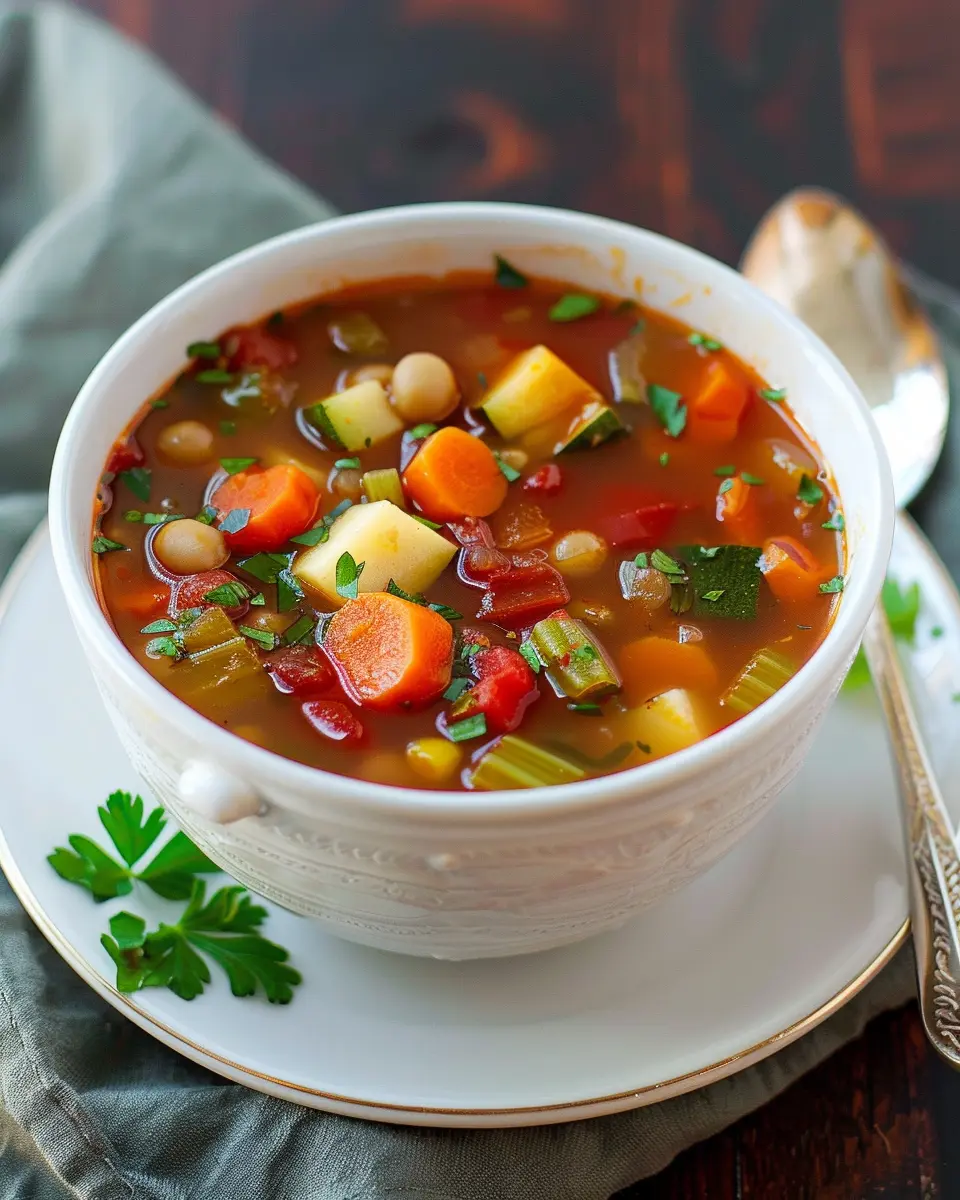
Introduction to Vegetable Soup Recipe
When it comes to comfort food, few things rival a rich, hearty vegetable soup recipe. With just a handful of ingredients, you can create a dish that’s not only nourishing but also brimming with flavor. Whether you’re returning home after a long day or need something light yet filling for lunch, this homemade delight is a true game-changer.
Why Homemade Vegetable Soup Is a Game-Changer
Imagine coming home to the enticing aroma of a simmering pot of freshly made vegetable soup. One of the best parts about creating your own soup is the ability to control the ingredients. You’re able to personalize it to your taste and dietary needs. Want it vegan? No problem. Prefer it hearty with Turkey Bacon or Chicken Ham for extra protein? You got it!
According to the Harvard Health Publishing, consuming a variety of vegetables can lead to a lower risk of chronic diseases. Soups make it easy to sneak in those colorful veggies. Think of carrots, bell peppers, and peas swimming in a savory broth; the colors alone are revitalizing!
Not to mention the time and cost savings of homemade soups compared to store-bought. Did you know that making your own soup can cut costs significantly? Experts suggest that preparing your own meals can save households hundreds of dollars a month. When you whip up a big batch of vegetable soup, you not only serve multiple meals at once but also minimize waste.
Now, let’s discuss flavors. There’s something truly fulfilling about using fresh, in-season produce. You can grab some ingredients from your local farmers’ market or grocery store and let your creativity flow. Add a dash of herbs, spices, and seasoning to enhance the taste, and you’ll have a dish that dazzles the taste buds.
Finally, let’s not overlook the health benefits. Homemade vegetable soup is often lower in sodium compared to its canned counterparts, making it a much healthier option. It’s a simple way to inject some extra vitamins and minerals into your diet.
In this article, we’ll guide you through a delicious and versatile vegetable soup recipe that you can adapt to your liking, ensuring that every bowl is comforting and nourishing. Get ready to enjoy the culinary adventure!
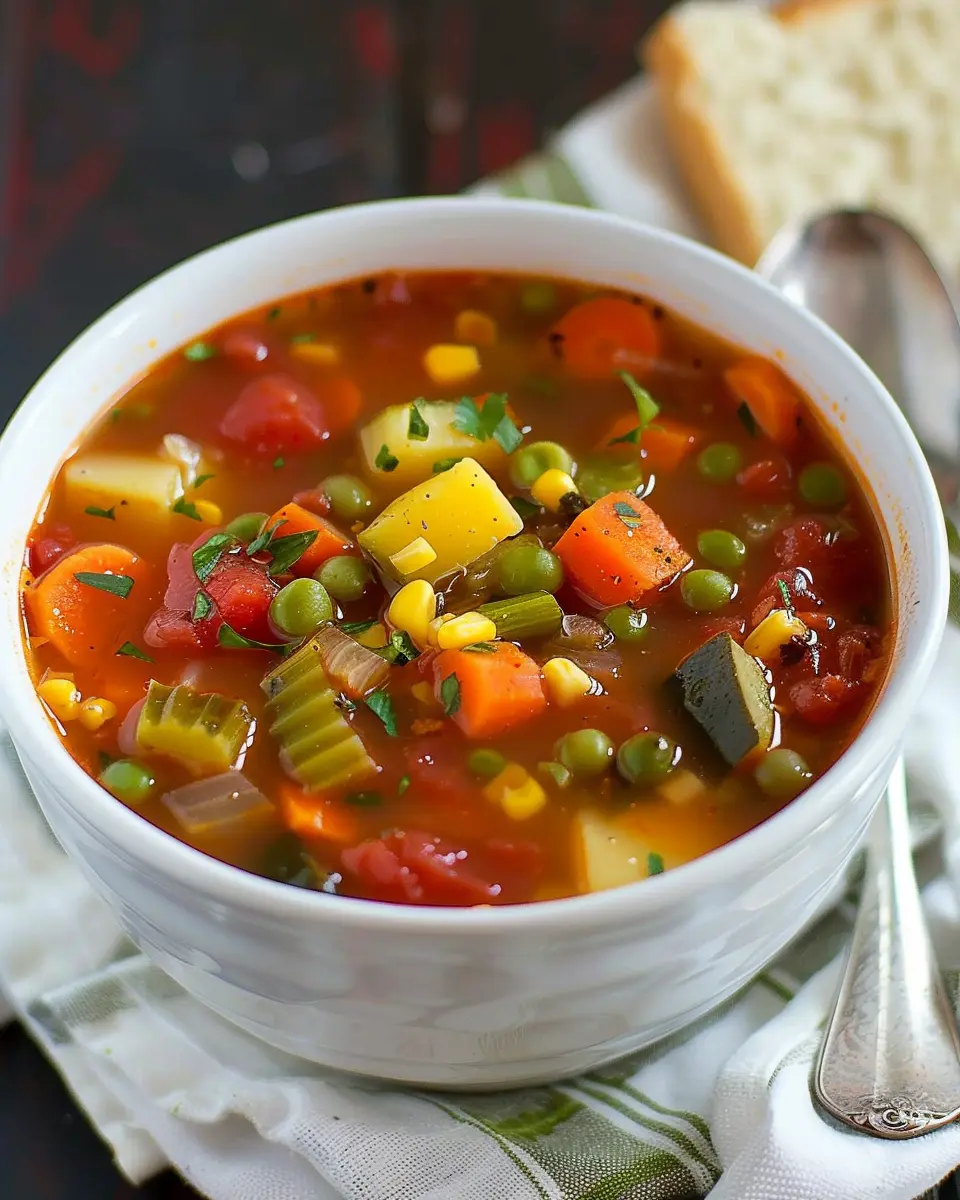
Ingredients for Vegetable Soup Recipe
Creating a delicious vegetable soup recipe starts with selecting the right ingredients. Here’s a quick guide to help you gather everything you need for a hearty meal.
Essential vegetables and herbs to include
When it comes to the foundation of your vegetable soup, stick with these vibrant picks:
- Carrots: Add a sweetness and a pop of color.
- Celery: Brings a subtle earthiness and crunch.
- Potatoes: For heartiness and a creamy texture when cooked down.
- Onions and garlic: The aromatic base that elevates flavor.
- ** tomatoes**: Fresh or canned, they add acidity and depth.
- Spinach or kale: Throw in some greens for added nutrients and flavor.
Fresh herbs like thyme, parsley, or bay leaves will infuse your soup with aromatic goodness.
Optional ingredients for added flavor
Want to kick it up a notch? Consider these optional ingredients:
- Turkey bacon or chicken ham: For a hint of smokiness without being overpowering.
- Chickpeas or lentils: To boost protein and make it even more satisfying.
- Zucchini or bell peppers: These vegetables add variety and texture.
- A splash of vegetable broth or coconut milk can enrich the taste subtly.
This balance of ingredients ensures you create a soup that warms not just your body but also your soul. Explore more on how to customize your soup at Simply Recipes for inspiration. Happy cooking!
Preparing Vegetable Soup
Vegetable soup is one of those comforting dishes that always feels like a warm hug in a bowl. It’s hearty, nutritious, and can easily be customized based on what you have on hand. Let’s walk through the steps to create a delicious vegetable soup that you can enjoy any time of year.
Gather your ingredients and tools
Before we dive into the cooking process, it’s essential to have all your ingredients ready. This not only makes cooking easier but also more enjoyable. Here’s a quick list to get you started:
- Fresh vegetables: Consider onions, carrots, celery, bell peppers, garlic, zucchini, and any seasonal vegetables you love.
- Broth: Vegetable broth is the classic choice. If you want a richer flavor, chicken broth works great too!
- Protein: Adding proteins like turkey bacon or chicken ham can elevate your soup while providing that comforting heartiness.
- Herbs and spices: Fresh thyme, bay leaves, salt, pepper, and parsley will enhance your soup’s flavor profile.
- Tools: You’ll need a large pot or Dutch oven, a cutting board, a sharp knife, and a stirring spoon.
Starting with everything organized makes the cooking process smooth and fun! Plus, it’s a great way to experiment with different flavor combinations. If you’re curious, check out this guide on seasonal vegetables to see what’s fresh right now.
Sauté aromatics for depth of flavor
Once you’ve gathered your ingredients, it’s time to build the flavor. Heat a tablespoon of olive oil or butter in your pot over medium heat. Add chopped onions, garlic, and celery. Sautéing these aromatics for about 5-7 minutes can transform your vegetable soup recipe into something spectacular.
The key is to stir occasionally, allowing the aromatics to soften and begin to caramelize just slightly. This step creates a flavor base that’s bursting with depth. Smell that? It’s the promise of deliciousness to come! If you fancy a bit of spice, consider adding red pepper flakes or fresh herbs to the mix right now.
Add broth and main vegetables
With your aromatic base ready, it’s time to introduce the star players: the vegetables! Pour in your selected broth—about 4-6 cups depending on your desired soup consistency. Next, toss in your chopped vegetables like carrots, zucchini, bell peppers, and even a handful of leafy greens like spinach or kale.
Don’t forget to add the proteins you chose earlier! This will make your soup heartier and more satisfying. Bring everything to a gentle boil, then reduce the heat to low.
Simmer until the vegetables are tender
Here comes the magic part: letting everything simmer together! Cover the pot loosely and let your soup cook for about 20-30 minutes. This allows the flavors to meld beautifully, and your vegetables will become tender and vibrant.
Keep an eye on it—if the soup seems too thick, feel free to add a splash more broth or water. Remember, a well-made vegetable soup should be a harmonious balance of textures and flavors. If you’re curious about nutritional benefits, vegetables are an excellent source of vitamins and minerals; check out this nutritional guide!
Final touches and seasoning adjustments
Once your vegetables are tender and the aromas wafting from your pot are making your mouth water, it’s time to taste! Before serving, consider adjusting the seasoning. A pinch more salt, a dash of pepper, or a sprinkle of fresh herbs can elevate your dish. You might even squeeze in some lemon juice or a drizzle of balsamic vinegar for an extra kick.
Before you ladle your hearty vegetable soup into bowls, garnish with fresh herbs like parsley or thyme. Not only does it look appealing, but it also adds that fresh flavor right before you dig in.
And there you have it—a simple, delightful vegetable soup recipe that is customizable to fit your mood and pantry. As you enjoy each comforting spoonful, feel good knowing you’ve created something wholesome and nutritious. Happy cooking!
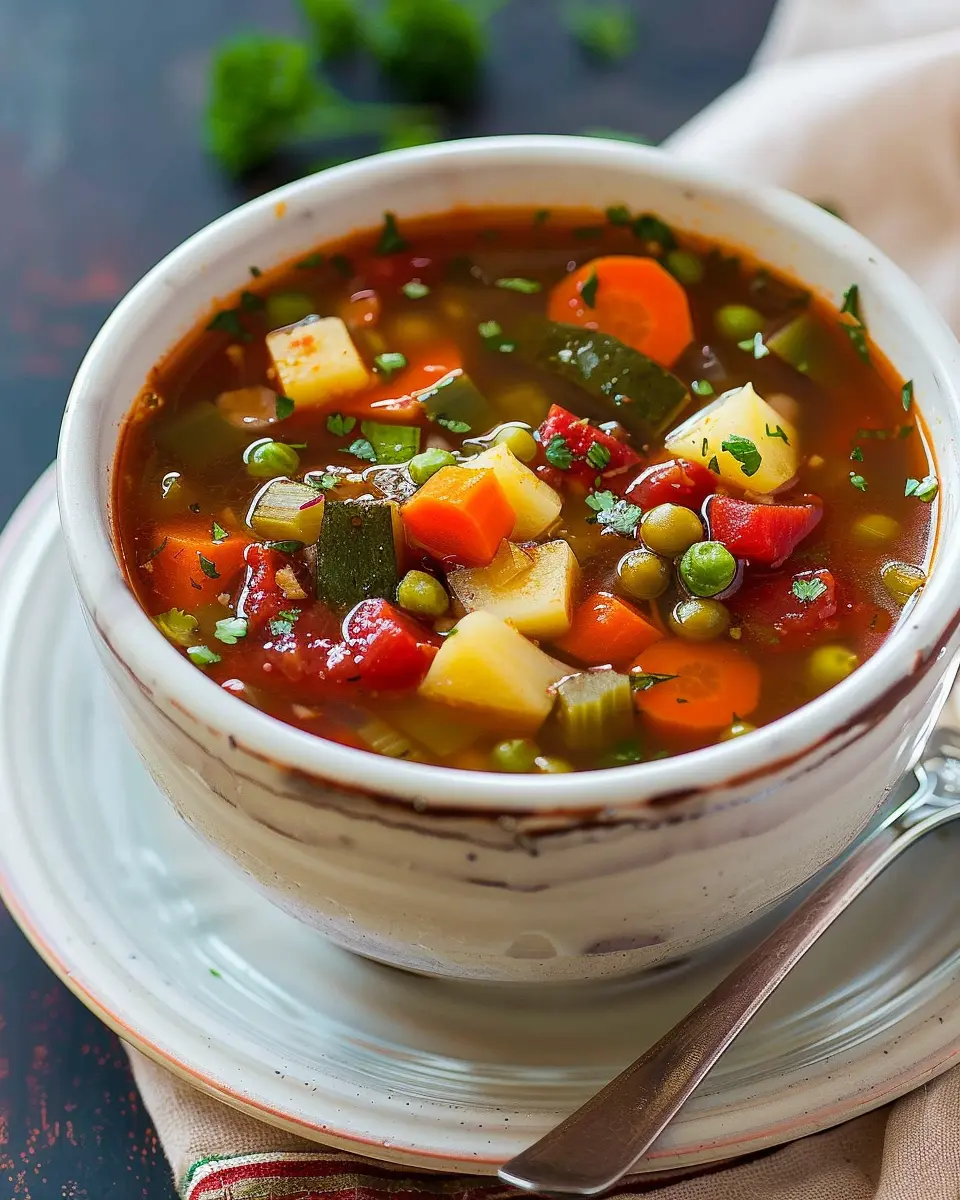
Variations on Vegetable Soup
Seasonal Vegetable Soup Recipes
When it comes to a vegetable soup recipe, thinking seasonally can elevate your dish dramatically. During the spring, try adding fresh peas, asparagus, and zucchini for a vibrant, green soup that’s perfect for lighter meals. Summer begs for tomatoes, bell peppers, and corn; consider a chilled version to beat the heat. In the fall, root vegetables like carrots, sweet potatoes, and parsnips can create a warm, comforting bowl that hugs you from the inside out. Finally, winter is ideal for hearty greens like kale or collards, which can add a robust flavor and nutritional punch. Not only do seasonal ingredients taste better, but they’re often more affordable and sustainable.
Explore more about seasonal eating from organizations like the Seasonal Food Guide.
Spicy Vegetable Soup Options
If you’re a fan of a little heat, you can easily transform your vegetable soup recipe into a spicy sensation. Think about adding ingredients like diced jalapeños, crushed red pepper flakes, or even a spoonful of harissa to your bubbling pot. For a unique twist, why not try using a coconut milk base and incorporating curry powder? This not only adds heat but also brings a creamy texture that’s irresistible.
Experimentation is key when it comes to spice. You can adjust the level of heat to suit your palate. Additionally, don’t shy away from using bold herbs like cilantro or basil, which can bring depth to any spicy vegetable concoction. If you’re unsure where to start, check out some great recipes on websites like Serious Eats for inspiration.
By adding a personal touch to your soup, you’ll never feel bored in the kitchen again. So what will your next creation look like?
Cooking tips and notes for Vegetable Soup
How to boost flavor and nutrition
Elevating your vegetable soup recipe can be as simple as incorporating fresh herbs or spices. Consider adding:
- Herbs: Fresh basil or thyme can add depth. Just toss in towards the end of cooking!
- Spices: A pinch of cumin or smoked paprika can give a warm, cozy feel.
- Nutritious extras: Toss in a handful of spinach or kale for an added nutrient boost.
For a unique twist, you might explore options like miso or nutritional yeast for umami flavors without added sodium.
Ingredient substitutions and adjustments
Feel free to customize your vegetable soup recipe based on what you have on hand! Here are some smart swaps:
- Broth: Use vegetable broth for a plant-based option or chicken broth for added richness.
- Veggies: Substitute any root vegetables or leafy greens based on personal preference or seasons.
- Proteins: Swap in turkey bacon or chicken ham for a heartier soup, ensuring a good balance of flavors.
Experimenting can lead to delightful surprises, so don’t hesitate to get creative! For more substitutions, check out resources from the American Institute for Cancer Research.
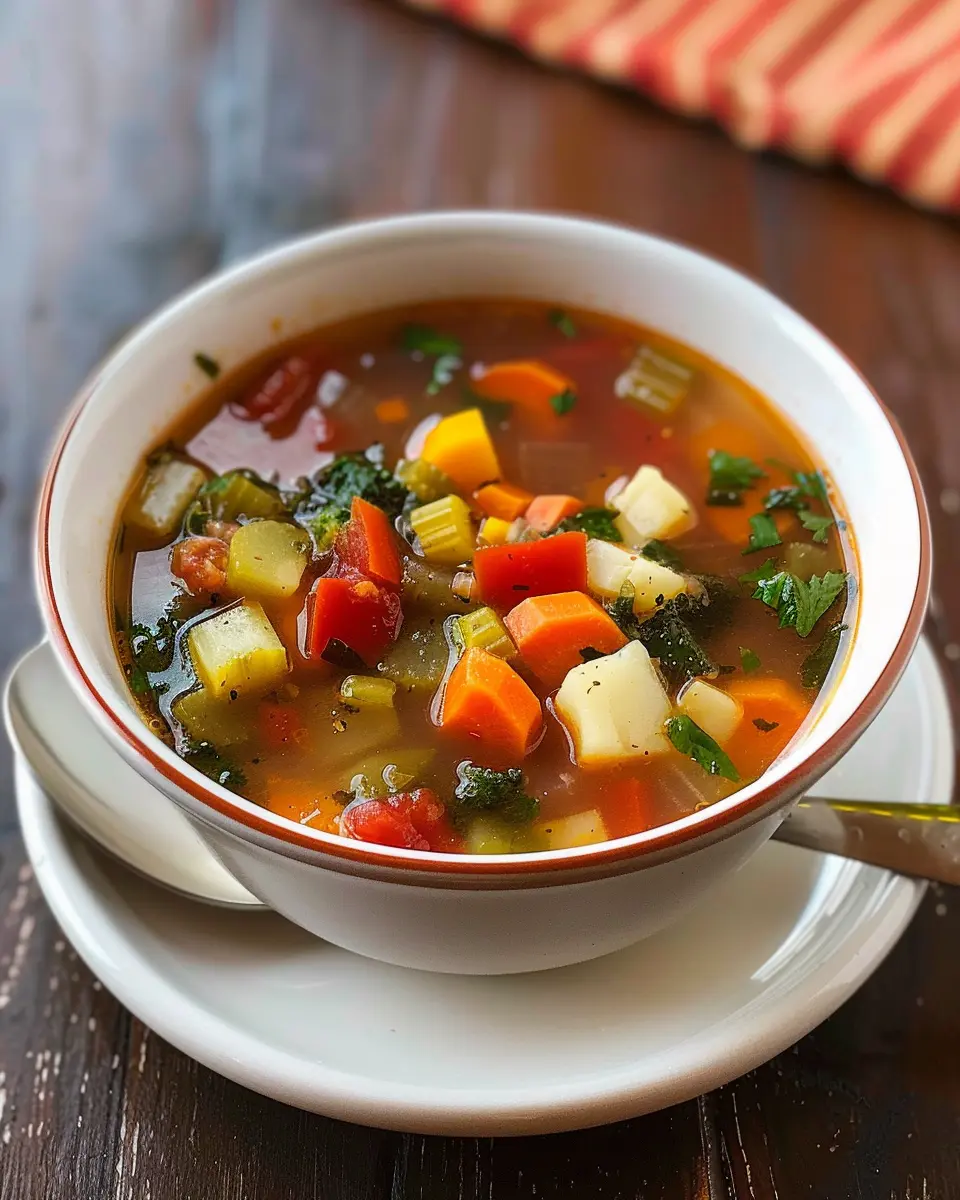
Serving Suggestions for Vegetable Soup
Perfect pairings for a complete meal
When it comes to enjoying your comforting vegetable soup recipe, it’s all about balance. Pairing it with a crusty piece of whole-grain bread or a side salad can elevate your meal to new heights. Consider serving:
- Turkey bacon or chicken ham sandwiches: These add protein and flavor without overpowering the soup.
- A fresh garden salad: Toss in some mixed greens, avocado, and a zesty vinaigrette to complement the soup’s warmth.
- Cheese toasties: Grilled cheese made with sharp cheddar or Gruyère can bring a delightful crunch that contrasts well with the soup’s smooth textures.
Creative ways to serve and enjoy
Why not get a little creative with your vegetable soup recipe presentation? Here are some fun ideas:
- Mason jars: Serve individual servings in mason jars for a rustic touch—perfect for gatherings or meal prep!
- Toppings station: Set out toppings like croutons, fresh herbs, or even a dollop of pesto to let guests personalize their bowls.
- Warm beverages: Serve with a refreshing herbal tea or a sparkling water with lemon to cleanse the palate between spoonfuls.
Get inspired with more serving ideas from the experts at Epicurious. With these suggestions, your vegetable soup becomes more than just a meal; it transforms into an inviting dining experience.
Time Breakdown for Vegetable Soup
Preparation time
Getting everything ready for your vegetable soup recipe is a breeze! You’ll spend about 15 to 20 minutes chopping and measuring your ingredients. Take this time to let your creative juices flow—maybe add an extra veggie you love or spice things up with your favorite herbs.
Cooking time
Once you’re all set, the cooking phase is where the magic happens. Plan for about 30 to 40 minutes for your soup to simmer to perfection. This allows the vegetables to meld together beautifully, creating a rich flavor.
Total time
In total, you’re looking at roughly 45 minutes to 1 hour from start to finish. Perfect for a weeknight dinner or a cozy kitchen weekend project! For some great tips on timing and ingredient swaps, check out resources like Cooking Light for additional insights.
Enjoy this delicious, hearty dish packed with nutrients while fitting perfectly into your busy lifestyle!
Nutritional Facts for Vegetable Soup
When you’re diving into a homemade vegetable soup recipe, it’s key to understand the nutritional benefits packed into every hearty bowl. Here’s a quick breakdown of what you’re getting:
Calories
One serving of vegetable soup typically contains around 100 calories. This makes it an excellent choice for those calorie-conscious days when you want something filling yet light.
Protein
While vegetables are low in protein, a serving of soup can provide approximately 3-4 grams. Consider adding chickpeas or a sprinkle of turkey bacon to boost that protein content!
Fiber
Fiber lovers rejoice! A generous serving of vegetable soup can offer around 3-5 grams of fiber, which is essential for digestive health. Plus, there’s no better way to meet your daily vegetable intake than with this comforting dish.
For more about the health benefits of fiber, check out resources from the Mayo Clinic and elevate your soup game!
FAQs about Vegetable Soup Recipe
How long does vegetable soup last in the fridge?
Homemade vegetable soup is a nourishing dish that you can enjoy throughout the week. Generally, it can last in the fridge for about 3 to 5 days if stored in an airtight container. To ensure freshness, let the soup cool down before refrigerating and always check for odd smells or changes in color before consuming leftovers.
Can I freeze vegetable soup?
Absolutely! Freezing your vegetable soup recipe is an excellent way to prolong its life. Pour the cooled soup into freezer-safe containers or resealable bags, making sure to leave some space at the top for expansion. It can last in the freezer for up to 3 months. When you’re ready to enjoy, simply thaw it in the fridge overnight and reheat on the stovetop or microwave. You can find more freezing tips at Love Food Hate Waste.
What are the best vegetables for soup?
The beauty of soup lies in its versatility! Here’s a list of some of the best vegetables to include in your vegetable soup recipe:
- Carrots: Add sweetness and nutrition.
- Celery: Gives a nice crunch and flavor base.
- Zucchini: Absorbs flavors and adds a soft texture.
- Spinach: Boosts the nutritional value and color.
- Tomatoes: For a rich taste and acidity.
- Bell peppers: For added sweetness and crunch.
Feel free to experiment with seasonal or leftover veggies in your fridge; you might stumble across a delightful combination!
By following these tips, you’ll maximize both the flavor and longevity of your delicious soup creations. Happy cooking!
Conclusion on Vegetable Soup Recipe
Creating your own vegetable soup recipe is a delightful way to step into healthy eating. Not only do you control the ingredients—ensuring freshness and nutrition—but you also save money and reduce waste. Plus, experimenting with spices and veggies can lead to your signature dish!
Consider the versatility of this soup; you can tailor it to your preferences, adding Turkey Bacon or Chicken Ham for a protein boost. Whole Foods reports that incorporating more vegetables into your diet can significantly enhance your nutrition and overall well-being. So why not try your hand at this comforting dish? Dive into your kitchen, and enjoy the satisfying experience of cooking something nourishing!
PrintVegetable Soup Recipe: A Hearty and Easy Comfort Food Delight

This Vegetable Soup Recipe is a delightful and comforting dish that warms the soul. It’s easy to make and packed with nutritious vegetables.
- Prep Time: 15 minutes
- Cook Time: 30 minutes
- Total Time: 45 minutes
- Yield: 4 servings 1x
- Category: Soups
- Method: Stovetop
- Cuisine: American
- Diet: Vegetarian
Ingredients
- 2 cups vegetable broth
- 1 cup diced carrots
- 1 cup chopped celery
- 1 cup diced potatoes
- 1 cup diced tomatoes
- 1 cup chopped onions
- 2 cloves minced garlic
- 1 teaspoon dried basil
- 1 teaspoon dried oregano
- Salt and pepper to taste
Instructions
- In a large pot, heat the vegetable broth over medium heat.
- Add the carrots, celery, and onions. Cook until softened, about 5 minutes.
- Stir in the garlic, potatoes, tomatoes, basil, and oregano. Season with salt and pepper.
- Cover and simmer for 20-25 minutes until the vegetables are tender.
- Serve hot and enjoy!
Notes
- This soup can be customized with other seasonal vegetables.
- For a creamier texture, blend a portion of the soup.
Nutrition
- Serving Size: 1 bowl
- Calories: 150
- Sugar: 5g
- Sodium: 800mg
- Fat: 2g
- Saturated Fat: 0g
- Unsaturated Fat: 0g
- Trans Fat: 0g
- Carbohydrates: 30g
- Fiber: 6g
- Protein: 5g
- Cholesterol: 0mg
Keywords: Vegetable Soup, Comfort Food, Easy Soup Recipe